Dad was spring-cleaning his room and found this useful guide "Kurikulum Kertas Ujian Bertulis Bahasa Melayu". It was published in March 2004 by the Immigration and National Registrar Department, Ministry of Home Affairs.
Under the Akta Taraf Kebangsaan Brunei Penggal 15, Peraturan Taraf Kebangsaan (Lembaga Bahasa) [di bawah Peraturan 9 (3)], in order to apply for Bruneian citizenship, he or she must sit for a Malay written test.
Though I have never been through this test, but I really pity the not-so-educated candidates. Five sections are being tested, namely:
Section 1 - writing a composition
Section 2 - comprehension
Section 3 - Grammar & Bahasa Brunei (Perambahan & Bahasa Dalam) & Pantun
Section 4 - general description
Section 5 - knowledge on Brunei (MIB Philosophy, system of governance, national flag and personal flags, history, royal regalia, national anthem, customs and culture of Bruneian Malay, traditional songs and dance, geography and international relations)
The last section sounds very interesting to me, and I will post some articles on these.
p/s: I am really lucky and grateful that my citizenship was granted through bab 6 (1). If not, I would have to sit for this exam.
Wednesday, October 15, 2008

Tuesday, October 14, 2008
Titah sempena Majlis Sambutan Hari Raya Aidilfitri anjuran Yayasan SHHB
Titah Kebawah Duli Yang Maha Mulia Paduka Seri Baginda Sultan Haji Hassanal Bolkiah Mu’izzaddin Waddaulah, Sultan Dan Yang Di-Pertuan Negara Brunei Darussalam Sempena Majlis Sambutan Hari Raya Aidilfitri 1429 Hijrah / 2008 Masihi Anjuran Yayasan Sultan Haji Hassanal Bolkiah Pada Hari Isnin 12 Syawal 1429 / 13 Oktober 2008

TITAH
KEBAWAH DULI YANG MAHA MULIA PADUKA SERI BAGINDA
SULTAN HAJI HASSANAL BOLKIAH MU’IZZADDIN WADDAULAH,
SULTAN DAN YANG DI-PERTUAN NEGARA BRUNEI DARUSSALAM
KEBAWAH DULI YANG MAHA MULIA PADUKA SERI BAGINDA
SULTAN HAJI HASSANAL BOLKIAH MU’IZZADDIN WADDAULAH,
SULTAN DAN YANG DI-PERTUAN NEGARA BRUNEI DARUSSALAM
SEMPENA
MAJLIS SAMBUTAN HARI RAYA AIDILFITRI
TAHUN 1429 HIJRAH/2008 MASIHI
ANJURAN YAYASAN SULTAN HAJI HASSANAL BOLKIAH
PADA
HARI ISNIN 12 SYAWAL 1429/13 OKTOBER 2008
MAJLIS SAMBUTAN HARI RAYA AIDILFITRI
TAHUN 1429 HIJRAH/2008 MASIHI
ANJURAN YAYASAN SULTAN HAJI HASSANAL BOLKIAH
PADA
HARI ISNIN 12 SYAWAL 1429/13 OKTOBER 2008
BERTEMPAT
DI DEWAN PLENARY
PUSAT PERSIDANGAN ANTARABANGSA, BERAKAS
DI DEWAN PLENARY
PUSAT PERSIDANGAN ANTARABANGSA, BERAKAS
Alhamdulillah, syukur ke hadrat Allah Subhanahu Wata’ala atas limpah rahmat-Nya mengizinkan kita menyambut Hari Raya Fitrah yang mubarak.
Kehadiran Hari Raya telah menjanjikan limpah kurnia besar dari Allah untuk kita umat Islam. Ia juga merupakan Hari Suci, dinamakan Aidilfitri atau Hari Raya Fitrah. Dalam bahasa, salah satu makna fitrah itu ialah ‘agama’ iaitu Agama Islam yang suci. Kemudian, ia dihubungkan pula dengan pengeluaran zakat fitrah. Zakat adalah bererti sedekah atau pembersihan terhadap diri dan juga terhadap harta.
Syari’at zakat turut menjadi landasan memperkukuh ummah. Dengannya, pembelaan terhadap golongan yang daif dapat direalisasikan.
Begitulah antara lain rahsia zakat. Negara Brunei Darussalam tidak terkecuali dari mempunyai pelbagai kelompok masyarakat yang memerlukan perhatian. Kita juga mempunyai kelompok fakir miskin, golongan remaja yang menjadi magsa dadah, mangsa bencana alam dan seumpamanya.
Namun kita bersyukur kerana masih mempunyai anggota masyarakat yang prihatin, yang sentiasa bersedia untuk menyumbangkan khidmat bakti bagi membantu golongan-golongan ini. Di antara tanda keprihatinan itu ialah penunaian zakat oleh orang-orang Islam.
Sambutan Hari Raya Aidilfitri anjuran Yayasan Sultan Haji Hassanal Bolkiah pada tahun ini, menampilkan sukarelawan dan rakan-rakan strategik kepada Yayasan, iaitu dua kumpulan yang gemar membantu dan melaksanakan kerja-kerja kebajikan. Kepada mereka ini, beta ucapkan tahniah dan penghargaan yang ikhlas.
Para remaja dan belia amat perlu didedahkan kepada sikap kesukarelawan seperti ini. Ia akan memberkan suntikan kesedaran kepada generasi muda untuk lebih peka dengan nasib anak bangsa yang memerlukan bantuan, di samping juga akan menipiskan sikap mementingkan diri sendiri di kalangan mereka.
Pembentukan sikap yang besar ini sangatlah mustahak, terutama di zaman yang amat pesat dengan pembangunan ini. Kita tidak mahu pembangunan itu akan menjadikan budaya kita lemah. Budaya orang Brunei ialah budaya muafakat dan budaya tolong-menolong. Ia perlu kuat dan terus diamalkan, bukan seperti di kebanyakan bahagian dunia hari ini, budaya seperti ini sudah agak lemah, digantikan oleh budaya berlepas tangan dan budaya nafsu-nafsi.
Berdasarkan semangat muafakat serta sikap mengambil berat inilah, maka baru-baru ini beta telah memperkenankan penubuhan Majlis Kebangsaan Isu Sosial, untuk menangani masalah dan isu sosial yang sangat merunsingkan, yang juga akan berperanan bagi menyelaras program-program yang dirancang oleh agensi-agensi yang terlibat supaya lebih berkesan dan teratur.
Sehubungan dengan itu, beta juga menyambut baik inisiatif Yayasan Sultan Haji Hassanal Bolkiah menubuhkan Unit Sukarelawannya. Beta difahamkan, sejak penubuhannya tahun 2005, unit ini sekarang telah mempunyai ahli seramai 564 orang, yang terdiri daripada para belia dari pelbagai latar belakang pendidikan dan kemahiran. Unit ini tentu saja sudah mempunyai rancangan-rancangannya yang telah atau sedang dilaksanakan dengan jayanya.
Sebagai sebuah institusi sosial, Yayasan Sultan Haji Hassanal Bolkiah menyedari, bahawa ia tidak dapat bergerak sendirian tanpa sokongan agensi-agensi kerajaan mahupun swasta serta lain-lain badan di luar kerajaan. Dalam makna, Yayasan memang memerlukan kerjasama melalui pendekatan rangkaian strategik dengan agensi-agensi dan badan-badan tersebut, khasnya dalam memastikan keberkesanan pengurusan dan penyaluran bantuan-bantuan sosial kepada masyarakat. Alhamdulillah, sejauh ini beta melihat, Yayasan telah pun menikmati kerjasama tersebut.
Apa yang kita buat ini, menepati tradisi kebanyakan institusi-institusi sosial di seluruh dunia. Mereka itu telah mengendalikan program-program kemasyarakatan mereka melalui pendekatan yang dipanggil pendekatan strategik atau ‘strategic alliances’. Melalui pendekatan inilah, kepakaran, sumber tenaga manusia dan sumber kewangan boleh digunakan secara maksima untuk pembangunan yang berkesan.
Di negara kita, tidak kurang agensi-agensi dan badan-badan yang terlibat dengan program-program kemasyarakatan. Malah juga pihak-pihak individu yang prihatin.
Isu kemasyarakatan yang sering disebut-sebut, khasnya oleh media-media massa ialah isu kemiskinan. Agensi-agensi yang berkaitan telah turut menangani masalah ini dengan program-program mereka yang bermacam-macam, dengan fokus yang sama, iaitu mahu meringankan beban kemiskinan tersebut.
Pada hemat beta, isu kemiskinan di negara ini belumlah separah di tempat-tempat lain di luar negara. Ia mungkin dapat dikendalikan dengan lebih efektif melalui kaedah-kaedah praktikal yang bersesuaian dengan keadaan di negara ini. Cuma saja barangkali, kita ini belum lagi menemukan atau belum mahu mencuba kaedah-kaedah tersebut.
Salah satu cara yang telah pun dikenal pasti ialah melalui penggunaan sumber alam oleh manusia, di mana anggota masyarakat yang miskin adalah sebahagian daripada kelompok tersebut.
Dalam konteks ini, beta tertarik membaca The World Bank’s World Development Report 2007, yang menyatakan, bahawa bidang pertanian adalah mampu mengurangkan kadar kemiskinan secara efektif sebanyak empat kali ganda, berbanding sektor ekonomi yang lain. Ini tentu saja boleh menyuntik minda kita sebagai salah satu kaedah yang dapat dikembangkan bagi mengatasi masalah kemiskinan, di samping lain-lain kaedah lagi. Tinggal saja kita ini, mahu ataupun belum mahu lagi mencubanya.
Sekian, Wabillahit Taufiq Walhidayah Wassalamu’alaikum Warahmatullahi Wabarakatuh.
(Source: Press Room of Information Department website)
-----
HM underscores to uphold Bruneian culture based on consultation and helping one another
His Majesty Sultan Haji Hassanal Bolkiah Mu’izzaddin Waddaulah, the Sultan and Yang Di-Pertuan of Brunei Darussalam has underscored the need to uphold the Bruneian culture based on consultation and of helping one another. Speaking at a Hari Raya gathering organised by the Sultan Haji Hassanal Bolkiah Foundation Monday, the Monarch pointed that the festivity is correlated to the handing out of ‘zakat’ or tithes. Brunei Darussalam is not exempted from having its own various groups that are in need, including the poor, of youth falling victims to drugs as well as victims of natural disasters and the likes. Nevertheless, the Monarch said the ummah should be grateful for still having members of the community who are caring and ever prepared to contribute their services toward helping these groups. Among the gestures is by contributing the ‘zakat’ or tithe. His Majesty noted that the Hari Raya celebration brings forth volunteers and strategic partners of the Foundation that constitute two groups who are very willing to help implement welfare works. In this regard, the Monarch extended his congratulations and appreciation to them, adding that youth needs to be exposed to this kind of voluntary responsibilities. This will inject awareness among the young toward helping their compatriots in need, apart from eroding attitudes of self interest. This is extremely important especially in this age of intensive development. Development must not be allowed to weaken the consultation-based culture and mutual help. This must remain strong and continue to be practised, unlike in some parts of the world where such culture is weak and replaced by a culture of hands-off and lust and desire.
Based on the basis of discussion and consultation as well as mindfulness, His Majesty recently consented to the establishment of the National Council for Social Issues, designed to handle most perplexing social problems and issues. It also has a role to coordinate programmes planned by relevant agencies so as to be more effective and better organised. In this context, the Monarch welcomes the initiative by the Sultan Haji Hassanal Bolkiah Foundation to form its voluntary unit. Formed in 2005, the unit now has 564 members comprising youth from various educational and skills background. However, the Foundation cannot act alone without the support of government agencies and the private sector. It requires cooperation through strategic networking alliances with these agencies, especially in ensuring management effectiveness and channelling of social assistance to the community. The Foundation tries to fulfil the tradition of most social institutions around the world. It has been implementing community programmes through an approach called strategic alliances. Through this, expertise, human and financial resources can be maximised for effective development. In Brunei Darussalam, there is no shortage of agencies and bodies as well as individuals involved in community programmes.
His Majesty also highlighted social issues often mentioned in the mass media as the poverty issue. Relevant agencies have been handling this problem through their programmes focused on alleviating poverty. According to the Monarch, poverty in this country is not as critical as in some other countries. It can still be managed more effectively through practical ways. Only that, the society has not yet found or tried such ways. Nevertheless, one of the methods is through the use of natural resources by man, of whom the poor community is a part. His Majesty said he’s impressed by the World Bank’s World Development 2007 Report which states that agriculture is capable of reducing the poverty rate by four folds, compared to other economic sectors. This obviously encourages the society to develop agriculture as a way of overcoming poverty aside other means.
(Source: RTB News, 14th October 2008)
Monday, October 13, 2008
High-Protein Fakes & Articificial Nitrogen Enhancers

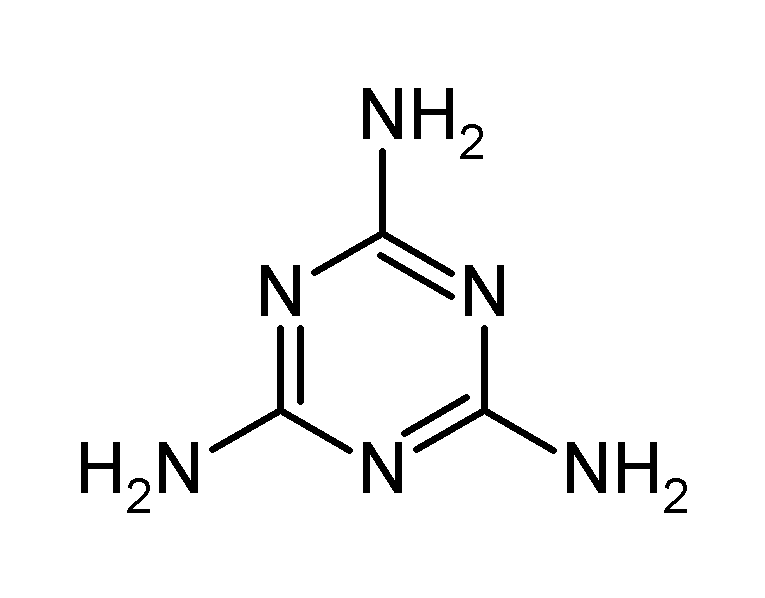
 (image from Wikipedia)
from The Straits Times, Review / Tech & Science, 11 Oct 08, pD11:
Is melamine the perfect evil?
The high-protein fake can harm, but beware - there're worse ingredients
By Andy Hor
MELAMINE is a relatively cheap industrial chemical that is readily available, fairly non-toxic, water-soluble and, most significantly, super-rich in nitrogen.
Foods that are high in proteins such as dairy products, wheat and corn gluten, soya and rice protein concentrate, are widely accepted as nutritious, and can command high prices.
Melamine and protein are as different as chalk and cheese.
They do, however, share one common feature - high nitrogen content.
In fact, melamine has more than five times the nitrogen found in proline, a common amino acid in milk proteins (casein).
This was what led to the devious use of melamine as a cheap 'high-protein fake' to falsely boost protein readings.
It has been pumped into everything from milk to pet food ingredients.
One kilogram of melamine costs about $60 in Singapore, but just $2.50 at its source in China. This is enough to dope more than 100,000 litre-cartons of the most contaminated milk found!
The bad news is, melamine is not the only 'non-protein nitrogen'.
Nor is it the worst ingredient you could find.
Other common examples include urea and ammonium nitrate.
There are known cases of urea (and its derivatives) being put illegally into products such as wheat. As for ammonium nitrate, it is used widely as fertiliser and can make its way into the food chain.
Their use as illegal food additives escapes routine detection because many commercial quality control processes merely test for the total nitrogen content of the proteins, not the protein itself. This is because testing proteins is both costly and tedious, particularly since milk has a complex mix of proteins.
This is the root of the problem.
There are established methods to detect melamine and other non-protein nitrogens, but they are not part of routine checks.
Proper milk-testing equipment looks for 'peptide bonds' using a process called spectroscopy as a direct measure of real proteins.
The Food and Agriculture Organisation of United Nations also recommends that the protein content in milk be confirmed by amino acid analysis because testing nitrogen content itself can be misleading.
However, it also says that detection based on total nitrogen content is an 'acceptable' alternative only when good data are not available, because complete protein testing costs more and takes much longer - important considerations for a manufacturer or testing lab.
Melamine is not a potent toxin and many healthy adults can get rid of it by metabolism or passing it out in our urine.
The problem is, break-down of melamine is very inefficient and when it degrades, it gives rise to another nitrogen-containing chemical - cyanuric acid.
Like melamine, its toxicity is low, but when these two combine, they form a crystalline complex that precipitates as a solid.
This can lead to kidney stones, renal failure and death in infants and pets, who are less efficient in getting rid of the chemicals.
A complete ban on melamine would not be the solution, although licensing would be useful.
Its toxicity is not high and it is a useful material for plastic, resins, coating materials, flame retardants and dyes.
More importantly, it is just one of the many nitrogen-rich chemicals known.
It is easily made from urea, which is a common fertiliser. Urea itself comes from ammonia, which is another useful nitrogen compound.
Unlawful use of hydrazine in food would be far worse, since it is a carcinogen. Nearly 90 per cent nitrogen, hydrazine has numerous industrial uses including foaming agents and anti-oxidants.
Cyromazine is another chemical that we should watch out for. It is a derivative of melamine, often used as pesticides and can be taken up by plants as melamine. Its presence in tomato paste is already an issue.
The easy answer is, of course, to widen the net and test for all possibilities, but this is very impractical.
What we should do is to have a balanced approach, taking into account cost, time, manpower and safety, and establish a system to include checks on melamine and its derivatives.
Periodic checks can be done on proteins, especially on high-protein goods, as well as spot checks for other artificial nitrogen enhancers.
We need to better equip our quality assurance labs, both at the factory and distributor levels, and at the enforcement level.
These, however, should not be done at the expense of stifling the business.
We must protect consumers' interest without killing the market.
We can draw comfort from the fact that melamine and its nitrogen-rich relatives are actually 'low-grade' protein counterfeits because chemically, they are very far off from proteins, and can be detected easily by our current armoury of analytical techniques.
We should, however, watch out for the possible event that 'high-quality' fakes are deliberately developed to beat detection techniques.
Vigilance, with the help of science, is our best defence.
The writer is president of the Singapore National Institute of Chemistry, and Head of Chemistry Department at the National University of Singapore.
-------
Latest Consumer Advisory from Agri-Food & Veterinary Authority of Singapore, 9 October 2008:
http://www.ava.gov.sg/NR/rdonlyres/9253E7B2-E57D-4992-982C-1304E73748D6/22223/Pressrelease_Updatesonmelamine_9Oct08website.pdf
Friday, October 10, 2008
World Competitiveness Index


The Global Competitiveness Report 2008-2009 conducted by the World Economic Forum. The full report is available online at http://www.weforum.org/documents/GCR0809/index.html
from Borneo Bulletin, 10th October 2008, p1:
Reference:
http://www.weforum.org/en/initiatives/gcp/Global%20Competitiveness%20Report/index.htm
from Borneo Bulletin, 10th October 2008, p1:
Brunei 39th in world in competitiveness
By Azlan Othman
A global survey on competitiveness has put Brunei behind Singapore, Malaysia and Thailand and above the rest of its Southeast Asian neighbours.
In the Global Competitiveness Report 2008-2009 conducted by the World Economic Forum, the Sultanate is ranked 39th out of 134 economies polled.
Brunei managed to get an overall score of 4.54 points out of the maximum seven points in the Global Competitiveness Index (GCI). The United States tops the overall ranking with Switzerland in second position followed by Denmark, Sweden and Singapore.
The strength of Brunei lies in its macroeconomic stability where it came second among 134 countries behind Kuwait with strong ranking in government surplus and deficit, inflation and government debt.
In terms of health, Brunei has come first in its HIV prevention initiative.
The country also received good rankings in Labour Market Efficiency (16th), Infrastructure (39th), Institutions (41st), Health and Primary Education (47th) and Technological Readiness (54th).
But Brunei's overall ranking is constrained by domestic market size (123th place), number of procedures and time required to start business (125th), availability of scientists and engineers (117th) and capacity for innovation (103th).
Brunei's GCI scores in Higher Education and Training, Goods Market Efficiency, Financial Market Sophistication, Business Sophistication and Innovation were close to the averages of all transition economies in the study. The country's GCI score in Market Size was below average for an economy that is undergoing transition from being factor driven to one which is efficiency driven. This was partly because of the small domestic and foreign market sizes of Brunei Darussalam.
The rankings are calculated from both publicly available data and the Executive Opinion Survey, a comprehensive annual survey conducted by the World Economic Forum together with its network of Partner Institutes, (leading research institutes and business organisations) in the countries covered by the report. In Brunei Darussalam, the partner institute is the Ministry of Industry and Primary Resources.
This year, over 12,000 business leaders were polled in a record 134 global economies.
The survey is designed to capture a broad range of factors affecting an economy's business climate. The report also includes comprehensive listings of the main strengths and weaknesses of countries, making it possible to identify key priorities for policy reform.
Speaking on behalf of the Ministry of Industry and Primary Resources, as the partners institute of the GCN in Brunei Darussalam, Pehin Dato Seri Setia Awg Haji Yahya bin Begawan Mudim Dato Paduka Haji Bakar, Minister of Industry and Primary Resources, welcomed the report and indicated that "Brunei Darussalam's GCI score and rank are quite respectable. The GCI score represents a third party assessment of what the country has achieved in its endeavour to develop a globally competitive economy. The 2008-2009 GCI score is a benchmark that Brunei hopes to surpass in the marathon race towards greater global competitiveness. This marathon requires consistent effort and unrelenting tenacity in addressing the various elements that need to be reformed in order to improve the country's level of competitiveness and achieve the goals of economic diversification. The report is timely as it will provide a boost in Brunei's drive in promoting inward investments, both from local and foreign sources".
Pehin Yahya also said, "The 12 pillars of the GCI has 110 variables, 33 of which are based on hard data. The GCN team has assessed Brunei as having competitive advantages in 32 of those 110 variables. The report also presented the perception of a representative sample of our business community on some of the challenges for doing business in the country. Clearly, while our current GCI index of 4.54 out of the seven maximum score is respectable, there are things that can be done to improve Brunei's competitiveness. For example, the task of enhancing our competitiveness requires the concerted and collaborative efforts of all stakeholders including government ministries and agencies, the business associations, entrepreneurs, managers and employees. The Ministry of Industry and Primary Resources is indeed committed to working with all in strengthening the country's competitiveness."
This year's report is the most comprehensive of its type. Coverage has been expanded to Brunei, Côte d'Ivoire, Ghana and Malawi.
Reference:
http://www.weforum.org/en/initiatives/gcp/Global%20Competitiveness%20Report/index.htm
Thursday, October 9, 2008
visiting the Istana Nurul Iman
 (c) Infofoto 2008
 (c) Jennifer Mok 2008
The Istana Nurul Iman received 101,890 Hari Raya Aidilfitri well-wishers from 2 to 4 Syawal 1429 when the palace was opened to the public.
First day of open = 19,336 (morning) + 22,813 (afternoon) = 42,149
Second day of open = 23,110 (morning) + 10,846 (afternoon) = 33, 956
Third day of open = 17,464 (morning) + 8,321 (afternoon) = 25,785
Total = 101, 890 people
Source: RTB News
Wednesday, October 8, 2008
NEW list of melamine-tainted products
The Ministry of Health (with reference to the Information on Food Safety Authority Networking (INFOSAN) of World Health Organisation) has just released updated lists of melamine-tainted products:
List of contaminated dairy products available at: http://www.moh.gov.bn/download/list-of-confirmed-contaminated-products.pdf
List of potentially contaminated dairy products: http://www.moh.gov.bn/download/list-of-reported-contaminated-products.pdf
For more information, please call the hotline of Food Safety and Quality Control Unit at 2331100/5/6/8/9/10 or fax at 2331107 or email at fsqc@moh.gov.bn or browse the website of Ministry of Health.
The list of contaminated dairy products:


Tuesday, October 7, 2008
rename of Bandar Brunei in 4th October 1970



Bandar Seri Begawan, capital of Brunei Darussalam, used to be Bandar Brunei prior to 4th October 1970. It was renamed in commemoration of Al-Marhum Sultan Haji Omar Ali Saifuddien Sa'adul Khairi Waddien who was well-known as 'The Architect of Modern Brunei'. Under the reign of Al-Marhum Sultan Omar Ali Saifuddien, there were rapid economic, social and political development as he introduced the 5-year First National Development Plan in 1953.

Quoting from the Lower Secondary History Guide for Brunei Darussalam:
from p102:
Sultan Omar Ali Saifuddien III was the first member of the royal family to suggest fact-finding visits to the rural villages. People began to respect and were confident in him. He also showed commitment towards improving the socio-economic standards and welfare of his people.
from p111:
Sultan Omar Ali Saifuddien III directed his time and energy to nation-building which were reflected in the two National Development Plans.
His Royal Highness' greatest achievement was the signing of the 1959 Constitution Agreement*. The positions of the Malay Language and Islam were strengthened through his determination. The Malay Language was to be the State Official Language and Islam, the State Religion.
Sultan Omar Ali Saifuddien III set up primary and secondary schools throughout the country to increase literacy. Scholarships for higher learning and overseas training were given to students.
In May 1961, The Royal Brunei Malay Regiment was set up. Brunei Currency Board issued its first currency note in 1967.
Sultan Omar Ali Saifuddien III voluntarily abdicated in favour of his eldest son, Yang Teramat Mulia Seri Paduka Seri Duli Pengiran Muda Mahkota Hassanal Bolkiah on 4 October 1967.
-----
*On 29 September 1959, The Constitution Agreement was signed at the Lapau between Sultan Omar Ali Saifuddien III and Sir Robert Scott, the Commissioner-General for Southeast Asia.
The significance of the 1959 Constitution Agreement:
- The Sultan as Supreme Head of State.
- Brunei was responsible for its internal administration.
- The British Government was responsible for foreign and defence affairs only.
- The post of Resident was abolished and replaced by a British High Commissioner.
- A new post of Menteri Besar was created. (The First Menteri Besar was Pehin Dato Perdana Menteri Dato Seri Laila Utama Awang Haji Ibrahim bin Mohammad Jahfar)
Reference:
Lower Secondary History Guide for Brunei Darussalam, 2003, SNP Panpac.
Royal birthday of Her Majesty
 Image (c) Infofoto 2006
Happy birthday to Her Majesty Raja Isteri Pengiran Anak Hajah Saleha binti Al-Marhum Pengiran Pemancha Pengiran Anak Haji Mohamed Alam
The nation prays that Her Majesty is always blessed with continual good health and happiness and many more birthdays to come.
Her Majesty was born in 7 October, 1946 at Kampong Sumbiling, Jalan Istana Darussalam, Bandar Brunei (Bandar Seri Begawan).
(source: Dirgahayu 2008)
(source: Dirgahayu 2008)
Thursday, October 2, 2008
Hari Raya ‘Idilfitri Tahun 1429 Hijrah / 2008 Masihi

(c) Infofoto 2008
TITAH PERUTUSAN
KEBAWAH DULI YANG MAHA MULIA PADUKA SERI BAGINDA SULTAN HAJI HASSANAL BOLKIAH MU’IZZADDIN WADDAULAH IBNI AL-MARHUM SULATAN HAJI OMAR ‘ALI SAIFUDDIEN SA’ADUL KHAIRI WADDIEN, SULTAN DAN YANG DI-PERTUAN NEGARA BRUNEI DARUSSALAM
SEMPENA HARI RAYA ‘IDILFITRI TAHUN
1429H/2008M
Assalamu’alaikum Warahmatullahi Wabarakatuh
Bismillahir Rahmanir Rahim
Alhamdulillahi Rabbil’alameen, Wabihee Nasta’eenu ‘Alaa Umuuriddunya Waddeen, Wassalatu Wassalamu ‘Ala
Bismillahir Rahmanir Rahim
Alhamdulillahi Rabbil’alameen, Wabihee Nasta’eenu ‘Alaa Umuuriddunya Waddeen, Wassalatu Wassalamu ‘
Allahu Akbar,
Allahu Akbar,
Allahu Akbar,
Walillahil Hamd,
Kedatangan Syawal kita sambut dengan takbir dan tahmid. Takbir dan tahmid adalah semboyan ‘kejayaan’. Dalam makna, kita sekarang telahpun berjaya, alhamdulillah.
Berjaya dalam perkara apa?
Kita berjaya dalam perkara ‘menta’ati Allah’, melalui ibadat berpuasa sebulan penuh dalam bulan Ramadhan.
Mengapa kepatuhan kita melaksanakan ibadat ini dipanggil kejayaan? Kerana puasa itu bukanlah perkara mudah, tetapi amat berat. Ia menyalahi kebiasaan, dan malah bertentangan dengan naluri dan nafsu manusia, terutama kebiasaan dan naluri makan minum.
Memang tidak siapa yang mahu lapar tanpa makan dan minum. Lebih-lebih lagi dengan senghaja melaparkan diri.
Kerana itu, tidak diragukan lagi, ibadat puasa adalah ujian paling getir bagi setiap individu muslim. Ia memerlukan ketabahan dan keyakinan. Barangsiapa yang tabah dan yakin, dialah yang akan berjaya.
Benar, ia berat dan getir. Tetapi orang yang tahu rahsianya, berat dan getir itu tidak lagi menjadi rintangan, lebih-lebih lagi kalau orang tahu, bahawa menurut sebuah hadis, syurga adalah bergembira dan berhias kerana kedatangan bulan Ramadhan.
Allah Ta’ala juga berseru pada setiap malam di bulan Ramadhan : Adakah sesiapa yang meminta? Aku akan beri dia. Adakah sesiapa yang bertaubat? Aku akan terima taubatnya.
Ini semua menjadi alamat bertapa mulia dan berkatnya bulan Ramadhan itu.
Di dalam buln ini juga terdapat satu malam, dinamakan Malam Qadar, atau dalam bahasa al-Qur’an: Lailatul Qadar. Amalan pada malam ini adalah lebih baik daripada seribu bulan yang dibuat pada bukan Malam Qadar.
Orang-orang Islam semuanya mengharapkan Lailatul Qadar. Kita di Brunei juga tidak terkecuali. Kita, telahpun menghidupkan malam-malam Ramadhan dengan al-Qur’an dan tarawih. Semogalah satu malam dari malam-malam yang kita hayati itu ialah Malam Qadar.
Sekarang, kita berada pula diambang raya. Allah Yang Maha Pemurah terus sahaja membukakan rahmat-Nya kepada orang-orang yang beraya. Menurut maksud sebuah hadis Nabi Sallallahu ‘Alaihi Wasallam : Barangsiapa yang menghidupkan dua malam hari raya dengan ibadat, maka tiadalah mati hatinya pada hari yang dimatikan segala hati.
Ini, merupakan isyarat jelas, bahawa hari raya juga hendaklah turut diisi dengan ibadat, bukannya dengan hanya suka-suka kosong atau hiburan-hiburan yang melekakan.
Berkata ulama ahli hikmah : hari raya itu mengandungi iktibar dan pengajaran, diantaranya, apabila berlalu Ramadhan dan menjelang Syawal, adalah itu umpama seorang yang apabila mati, akan pergilah dunianya dan datang pula akhiratnya. Apabila mendengar bedil serta sorak-sorai dihari raya, maka janganlah lupa, bahkan sentiasalah ingat akan tiupan sangkakala israfil di hari Kiamat kelak.
Demikian, semua hari-hari yang dilalui itu mengandungi hikmahnya yang tersendiri, lebih-lebih lagi hari-hari yang disyari’atkan, seperti Hari Raya, Hari ‘Arafah dan lain-lain.
Kita janganlah mengabaikan hikmah-hikmah itu, kerana ianya membawa kebaikan yang bukan sedikit, sama ada kebaikan untuk dunia, mahupun lebih-lebih lagi kebaikan diakhirat.
Oleh itu, didalam perkara hari raya, disamping tidak mencuaikan ibadat, kita juga dituntut supaya jangan menjerumuskan diri kepada perkara-perkara sia-sia yang menyalahi ugama, seperti pesta-pesta serta hiburan-hiburan yang tidak bermoral, pembaziran dan seumpamanya.
Allahu Akbar,
Allahu Akbar,
Allahu Akbar,
Walillahil Hamd,
Disa’at yang bersukur baik ini, Beta dan keluarga Beta tidak lupa mengucapkan Selamat Hari Raya ‘Idilfitri kepada semua rakyat dan penduduk yang berugama Islam dimana sahaja mereka berada. Semoga kita semua serta Negara sentiasa berada dalam aman, makmur dan selamat dibawah pemeliharaan Allah.
Sekian, Wabillahit Taufeq Walhidayah, Wassalaamu ‘Alaikum Warahmatullahi Wabarakaatuh.
Wednesday, October 1, 2008
Hari Raya Aidilfitri 1429H on 2nd October 2008
Pada menjunjung titah perkenan Kebawah Duli Yang Maha Mulia Paduka Seri Baginda Sultan dan Yang Di-Pertuan Negara Brunei Darussalam bahawa Yang Dipertua Majlis Ugama Islam Negara Brunei Darussalam memaklumkan Hari Raya Aidilfitri bagi negara ini jatuh pada hari Khamis, 1 Syawal 1429 Hijrah bersamaan 2 Oktober 2008.
Rombongan pegawai dan kakitangan dari Jabatan Syariah, Jabatan Hal Ehwal Masjid, Kementerian Hal Ehwal Ugama, Jabatan Kehakiman Negara, Jabatan Mufti Kerajaan dan Jabatan Ukur petang tadi berada di beberapa tempat yang ditentukan untuk merukyah anak bulan Syawal bagi tahun 1429 Hijrah.
Hasil daripada penglihatan yang telah dilakukan oleh rombongan berkenaan di tempat-tempat berkenaan mendapati anak bulan Syawal tidak sabit dilihat.
Hakim Mahkamah Tinggi Syariah, Yang Dimuliakan Pehin Orang Kaya Paduka Seri Utama Dato Paduka Seri Setia Haji Awang Salim bin Haji Besar memaklumkan perkara tersebut melalui Radio dan Televisyen Brunei.
(from the daily Pelita Brunei Online, 1st Oct 2008)
Rombongan pegawai dan kakitangan dari Jabatan Syariah, Jabatan Hal Ehwal Masjid, Kementerian Hal Ehwal Ugama, Jabatan Kehakiman Negara, Jabatan Mufti Kerajaan dan Jabatan Ukur petang tadi berada di beberapa tempat yang ditentukan untuk merukyah anak bulan Syawal bagi tahun 1429 Hijrah.
Hasil daripada penglihatan yang telah dilakukan oleh rombongan berkenaan di tempat-tempat berkenaan mendapati anak bulan Syawal tidak sabit dilihat.
Hakim Mahkamah Tinggi Syariah, Yang Dimuliakan Pehin Orang Kaya Paduka Seri Utama Dato Paduka Seri Setia Haji Awang Salim bin Haji Besar memaklumkan perkara tersebut melalui Radio dan Televisyen Brunei.
(from the daily Pelita Brunei Online, 1st Oct 2008)
Subscribe to:
Posts (Atom)